Can Laser Hair Removal Cause Pigmentation? How to Avoid Complications
Laser hair removal is one of the most popular cosmetic treatments today. It promises long-term hair reduction, smoother skin, and freedom from constant shaving or waxing. Yet, one concern we hear often in the clinic is, can laser hair removal treatment cause pigmentation?
If you’re considering laser treatment or if you’ve already had a session and noticed dark or light patches, this question is valid. As dermatologists, we believe informed patients make safer choices. So, let’s walk through this topic calmly, scientifically, and honestly.
Understanding How Laser Hair Removal Works on the Skin
Before we talk about pigmentation, it’s important to understand how laser hair removal interacts with your skin.
Laser devices work on the principle of selective photothermolysis. In simple terms:
- The laser emits light energy
- This energy targets melanin (pigment) in the hair shaft
- The heat damages the hair follicle, reducing future hair growth
Your skin also contains melanin. This is where things become important. Especially for Indian skin tones, which naturally have higher melanin levels.
When laser energy is correctly selected and precisely delivered, it focuses on hair follicles without harming surrounding skin. Problems arise when this balance is disturbed.
Can Laser Hair Removal Cause Pigmentation?
Let’s address the question directly: Yes, laser hair removal can cause pigmentation. But only under certain conditions.
Pigmentation after laser is not common, and when it occurs, it is usually temporary and preventable. Most cases happen due to improper technique, incorrect machine settings, or inadequate skin assessment.
Types of Pigmentation Changes After Laser Hair Removal
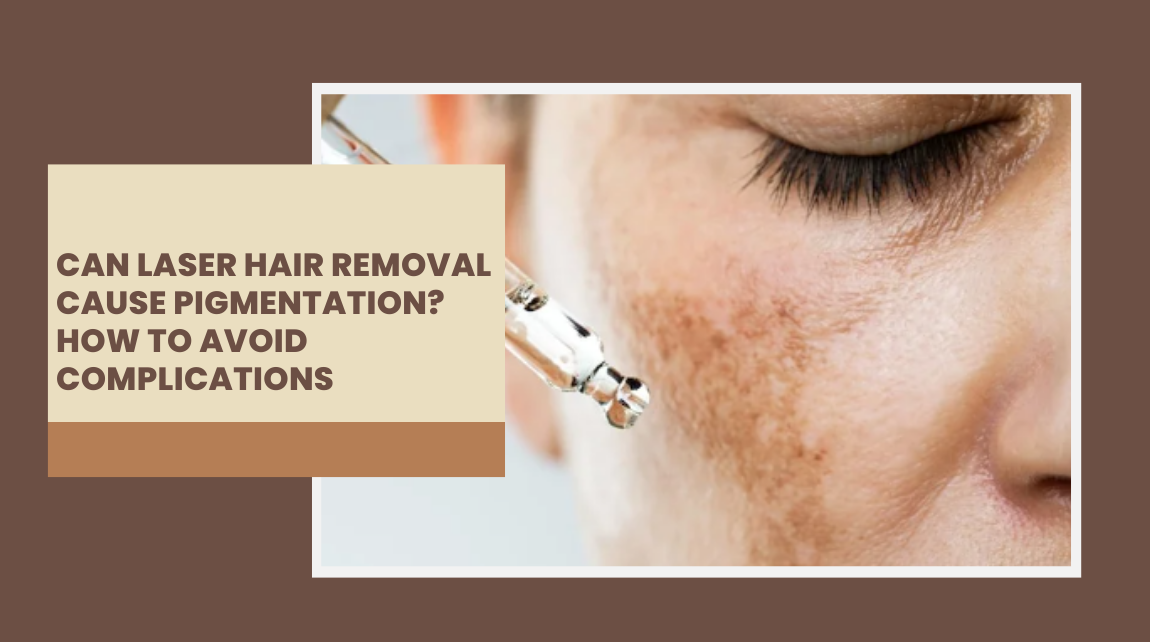
1. Post-Inflammatory Hyperpigmentation (PIH)
This is the most common pigmentation concern after laser hair removal. PIH appears as:
- Brown or dark patches
- Usually at the treatment site
- More noticeable on darker skin tones
It occurs when the skin experiences inflammation or mild injury, triggering excess melanin production as part of the healing response.
2. Hypopigmentation (Light Patches)
This is less common but can be more distressing. It appears as:
- Lighter patches than surrounding skin
- Temporary in most cases
- Rarely permanent
Hypopigmentation happens when excessive laser energy affects melanin-producing cells.
Why Does Pigmentation Occur After Laser Hair Removal?
Pigmentation does not occur randomly. In our experience, it is almost always linked to avoidable factors.
Common causes include:
- Using the wrong laser technology for your skin type
- Incorrect energy or fluence settings
- Skipping a patch test
- Treating recently tanned or sun-exposed skin
- Poor cooling during the procedure
- Inadequate post-laser care
This is why laser hair removal is both a cosmetic service and a medical procedure that requires expertise.
Who Is More Prone to Pigmentation After Laser Hair Removal?
Some skin types need extra caution. You may be at higher risk if you:
- Have medium to dark skin tones (Fitzpatrick IV–VI)
- Tan easily or have recent sun exposure
- Have a history of pigmentation or melasma
- Are undergoing hormonal changes (PCOS, pregnancy, thyroid issues)
- Have sensitive or acne-prone skin
- Are using active skincare ingredients (retinoids, acids)
This doesn’t mean laser hair removal is unsafe for you. It simply means your treatment must be customized.
Is Pigmentation After Laser Permanent?
This is one of the biggest fears we hear, and we want to reassure you. In most cases, pigmentation after laser hair removal is temporary. With:
- Early identification
- Proper skincare
- Sun protection
- Dermatologist-guided treatment
Pigmentation usually fades over weeks to a few months. Permanent pigmentation is rare and typically associated with repeated improper treatments or untreated burns.
How to Avoid Pigmentation During Laser Hair Removal
Prevention is always better than correction. Here’s how we help our patients minimize risks.
1. Proper Skin Evaluation Before Starting Treatment
Every patient’s skin is unique. A thorough consultation helps determine:
- Skin type
- Hair thickness
- Underlying pigmentation tendencies
This step should never be rushed.
2. Choosing the Right Laser Technology
Not all lasers are suitable for all skin tones. For Indian skin, devices like:
- Diode lasers
- Nd:YAG lasers
are generally safer when used correctly. The machine alone is not enough. How it’s used matters more.
3. Patch Testing Is Non-Negotiable
A patch test helps us see:
- How your skin reacts to laser energy
- Whether settings need adjustment
Skipping this step increases the risk of burns and pigmentation.
4. Avoid Sun Exposure Before and After Laser
Sun exposure increases melanin activity, making pigmentation more likely. We usually advise:
- No tanning for at least 2–3 weeks before treatment
- Strict sunscreen use after sessions
This is one of the simplest yet most powerful preventive steps.
5. Correct Session Gaps and Cooling Techniques
Treatments done too frequently or without adequate cooling can stress the skin. Proper spacing allows:
- Skin recovery
- Reduced inflammation
- Safer long-term results
What to Do If You Notice Pigmentation After Laser Hair Removal
If you notice darkening or light patches, don’t panic. But don’t ignore it either. Immediate steps we recommend:
- Stop further laser sessions temporarily
- Avoid sun exposure completely
- Do not use home remedies or harsh products
- Consult a dermatologist early
Early intervention often leads to faster and more complete recovery.
How Dermatologists Treat Laser-Induced Pigmentation
Treatment depends on the type and severity of pigmentation but may include:
- Medical-grade depigmenting creams
- Barrier-repair moisturizers
- Anti-inflammatory agents
- Chemical peels or laser toning (only when safe)
Self-treatment can worsen pigmentation, so guidance matters.
Why Clinic Expertise Matters More Than the Machine
Many people focus on the brand of laser, but in reality, the operator’s knowledge is more important. When laser hair removal is performed:
- Under dermatological supervision
- With proper protocols
- Using individualized settings
Complications become rare. This is especially important when considering best laser hair removal in Gurgaon, where clinics vary widely in quality, expertise, and safety standards.
Is Laser Hair Removal Safe When Done Correctly?
Yes. When performed correctly:
- Laser hair removal does not damage the skin
- Pigmentation risks remain minimal
- Results are consistent and predictable
Millions of patients undergo laser hair removal safely every year. Problems arise not from the technology itself, but from shortcuts and lack of medical oversight.
Laser Hair Removal in Gurgaon: What You Should Look For
If you’re considering laser treatment for hair removal in gurgaon, we recommend choosing a clinic that offers:
- Dermatologist-led consultations
- Skin-type-specific laser technology
- Mandatory patch testing
- Transparent pre- and post-care guidance
- Emergency protocols for skin reactions
These factors matter more than discounts or quick packages.
Final Thoughts
So, can laser hair removal cause pigmentation? Yes, but it is not inevitable, not permanent in most cases, and largely preventable. When you understand your skin, choose the right clinic, and follow medical advice, laser hair removal remains one of the safest and most effective hair reduction options available today. We believe your skin deserves informed care.
If you approach laser treatment thoughtfully, the results can be smooth, safe, and confidence-boosting. Kyra Beauty Clinic is top aesthetics clinic in Gurgaon, offering dermatologist-led skin and laser treatments with personalized care. For safe, visible results you can always confidently trust, book your appointment now.