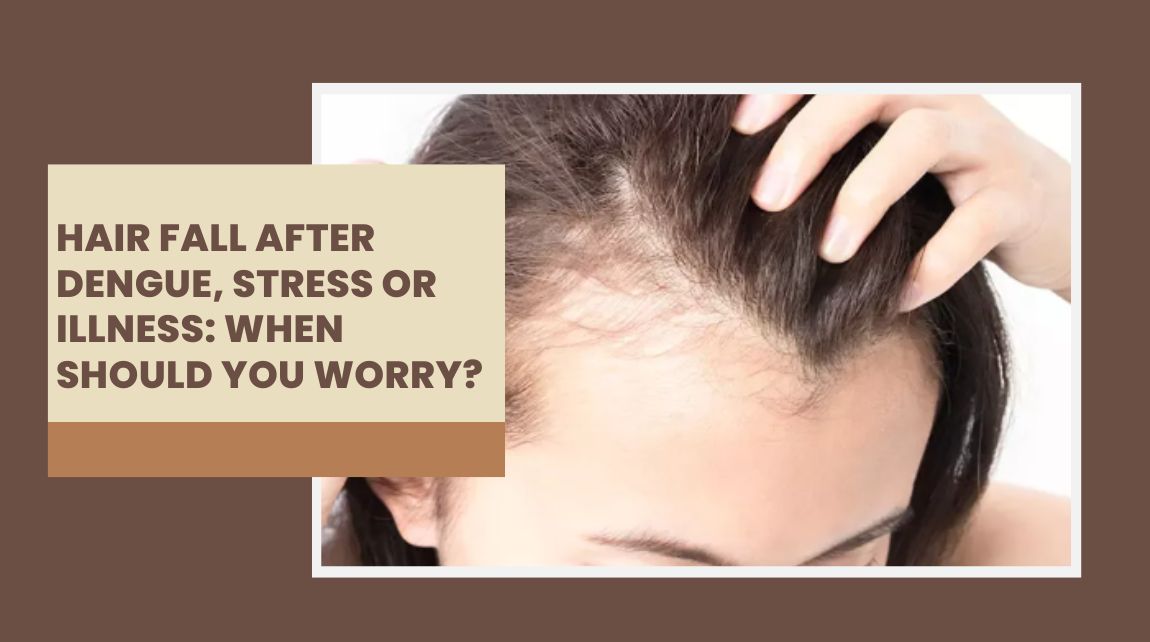
Hair Fall After Dengue, Stress or Illness: When Should You Worry?
The fever is gone. Energy slowly returns. Then suddenly, hair starts falling everywhere. On the pillow. During shampoo. Even while running fingers through the scalp. Most people panic at this stage because the shedding feels aggressive and unexpected. Some fear permanent baldness. Others start changing oils, shampoos, or supplements every week hoping the fall will stop immediately.
Here is the catch. Hair loss after Dengue, emotional stress, severe illness, surgery, COVID, or rapid weight loss is often linked to a medical condition called Telogen Effluvium (temporary stress-triggered hair shedding). In many cases, the follicles are still alive. The shedding looks dramatic, but recovery is possible with the right diagnosis and patience.
At Kyra Aesthetics, patients commonly ask the same question during consultation. “Why is my hair falling now when I recovered months ago?” The timing actually follows a medically predictable cycle.
Why Hair Falls After Dengue or Stress
When the body experiences a major physical or emotional shock, it shifts into survival mode. Energy and nutrients get redirected toward essential organs and immune recovery. Hair growth becomes a lower biological priority during that phase. Because of this, many follicles prematurely enter the resting stage of the hair cycle.
This condition is called Telogen Effluvium. By the way, hair usually does not fall immediately during illness. That delay confuses many people.
The 3-Month Delay in Hair Fall
Hair shedding commonly begins around 90 days after illness or stress. The follicles first stop active growth, enter a resting phase, and then release the old strands weeks later. So if Dengue happens in January and hair fall begins in April, both events are often directly connected.
This delayed shedding pattern is one of the biggest reasons people fail to associate the illness with hair loss.
What 2026 Research Says About Dengue Hair Loss
New 2026 studies have clarified the relationship between severe viral inflammation and follicle stress. Research now indicates that low platelet counts and low Hematocrit levels during Dengue may increase the risk of heavier post-recovery shedding. Because the inflammation affects the body systemically, follicles can temporarily “shut down” under stress.
Research published in the AJTMH Journal (2026) also reported that nearly 25–30% of patients hospitalized with Dengue or severe COVID experienced noticeable hair shedding during recovery. That number is larger than most patients expect.
Is Hair Falling With a White Bulb Normal?
Usually, yes. Many patients notice a tiny white bulb attached to the fallen strand and assume the root has died permanently. In most cases, that white tip is a club hair (naturally resting hair strand). It usually means the follicle itself is still alive underneath the scalp. That distinction matters. Because living follicles can restart hair production once the internal recovery stabilizes.
How Long Does Post-Illness Hair Fall Last?
Heavy shedding commonly continues for around 2 to 4 months before gradually slowing down. Recovery rarely feels instant. This is why many people assume treatments are not working even when the follicles are naturally recovering underneath.
Noticeable regrowth usually begins around 6 to 9 months after the original illness. Small baby hairs near the front hairline or partition are often the first visible signs.
According to the Cleveland Clinic, nearly 95% of acute Telogen Effluvium cases recover completely without permanent hair loss. But recovery speed still depends on nutritional status, scalp health, genetics, and ongoing stress levels.
When Should You Worry About Hair Fall?
Temporary post-viral shedding and progressive hair thinning are not always the same condition. This is where dermatological diagnosis becomes important.
Hair Fall Beyond 6 Months
If heavy shedding continues beyond six months, it may suggest Chronic Telogen Effluvium (long-term diffuse shedding condition). This usually needs blood investigations and scalp evaluation.
Patchy Bald Spots
Smooth circular bald patches are not typical post-Dengue shedding. This may indicate Alopecia Areata (immune-triggered patchy hair loss), which requires different treatment planning.
Burning, Itching, or Redness
Post-illness hair fall usually does not cause major scalp inflammation. Persistent itching, redness, or burning sensations may point toward dermatitis, fungal issues, or inflammatory scalp disorders.
Widening Hair Partition
Sometimes illness acts like a trigger rather than the original cause. It can expose underlying genetic hair thinning that was already progressing silently. Women may notice widening in the center partition, while men often observe faster temple recession after recovery.
Blood Tests Dermatologists Commonly Recommend
Many patients recovering from severe illness unknowingly develop nutritional deficiencies that slow follicle recovery. Since hair follicles are metabolically active structures, even mild deficiencies can prolong shedding. At Kyra Aesthetics, dermatologists often recommend blood investigations such as:
- Ferritin (stored iron levels)
- Vitamin D3
- Vitamin B12
- Zinc
- Thyroid profile
These tests help identify internal recovery barriers before treatment planning begins.
Should You Start Minoxidil Immediately?
Not always. This is where many people accidentally increase panic. High-strength Minoxidil can sometimes trigger a temporary “secondary shed” during the adjustment phase. That shedding is medically expected, but frightening for someone already anxious about excessive hair fall.
Because of this, treatment should match the diagnosis rather than social media advice.
Some patients only need nutritional correction and observation. Others may require active medical treatment if underlying genetic thinning is also present.
Can PRP or GFC Help After Dengue Hair Loss?
Yes. But treatment selection depends on the scalp condition.
PRP Hair Treatment
The PRP therapy (Platelet-Rich Plasma therapy using concentrated healing cells) uses growth factors from your own blood to support weak follicles. Since recovering follicles remain biologically stressed after illness, PRP may help stimulate healthier regrowth cycles.
GFC Hair Treatment
The GFC treatment (Growth Factor Concentrate treatment using purified growth proteins) is a more refined regenerative procedure designed to support follicle recovery while reducing inflammatory stress around weakened roots.
Patients often ask whether PRP or GFC is better. The answer depends on shedding severity, follicle health, scalp inflammation, and whether hereditary thinning already exists underneath the temporary hair fall. That is why scalp diagnosis matters first.
What Actually Helps Recovery at Home?
Simple recovery habits matter more than aggressive internet remedies.
Increase Protein Intake
Hair is composed largely of protein. Low-protein diets after illness can delay follicle recovery. Eggs, lentils, soy, sprouts, fish, and lean meats provide essential building material for new hair growth.
Avoid Heavy Oil Treatments
Many online “anti-hairfall oils” target external dryness. But post-illness shedding is usually an internal recovery issue rather than an oil deficiency. Heavy oils may even clog sensitive scalps in some people.
Use Gentle Scalp Care
Sulfate-free, caffeine-based, or rosemary-infused shampoos may help maintain scalp comfort without increasing irritation during active shedding phases.
Focus on Stress Recovery
Ongoing emotional stress can prolong the hair shedding cycle. Sleep quality, nutritional recovery, and stress management often influence how quickly follicles return to normal growth.
Is Hair Transplant Needed After Dengue Hair Fall?
Usually not for temporary Telogen Effluvium. Because the follicles are often still alive. But severe illness can sometimes expose pre-existing male or female pattern thinning that was previously hidden. In those cases, long-term restoration planning may become necessary.
At Kyra Aesthetics, treatment planning for Hair Loss Treatment in Gurgaon focuses on identifying the actual cause before recommending procedures. Some patients recover naturally with nutritional correction and monitoring. Others may benefit from PRP, GFC, medications, or eventually a hair transplant if permanent follicle miniaturization develops over time. Diagnosis should guide treatment. Don't panic.
Book Your Hair Consultation at Kyra Aesthetics
Post-Dengue hair fall can feel emotionally exhausting because the shedding often starts when recovery already seems complete. But temporary shedding and permanent thinning are not always the same condition. At Kyra Aesthetics, skin clinic in Gurgaon scalp evaluation focuses on identifying whether the issue is Telogen Effluvium, nutritional deficiency, inflammatory scalp disease, or underlying genetic thinning before recommending any hair loss treatment in Gurgaon like PRP, GFC, medication, or transplant planning. Since every follicle responds differently after illness, treatment should be based on the biology behind the shedding rather than trend-based hair fall solutions. Book appointment now.
FAQs
Is hair fall after Dengue normal?
Yes. Hair fall after Dengue is medically common and is often linked to Telogen Effluvium (temporary stress-triggered hair shedding). High fever, inflammation, low platelet count, and physical stress can push hair follicles into a resting phase. Shedding usually begins around 2–3 months after recovery.
How long does hair fall last after Dengue?
Most post-Dengue hair shedding lasts around 2 to 4 months. Regrowth commonly becomes noticeable within 6 to 9 months if the follicles remain healthy and there are no underlying deficiencies or genetic hair loss conditions.
Can Dengue cause permanent hair loss?
Temporary shedding from Dengue usually does not cause permanent baldness. According to medical data, nearly 95% of acute Telogen Effluvium cases recover naturally. Permanent thinning becomes more likely if Dengue triggers underlying genetic hair loss that already existed silently.
Why does hair fall start months after illness?
Hair follicles respond slowly to physical stress. After illness, many follicles enter a resting stage before shedding later. This delayed cycle explains why hair fall commonly starts around 90 days after fever, stress, or hospitalization.
What is the white bulb attached to fallen hair?
The tiny white bulb is usually a club hair (naturally resting hair strand). It often means the follicle is still alive underneath the scalp. In many cases, that follicle can produce new hair again after recovery stabilizes.
How can I tell if my hair fall is temporary or permanent?
Temporary shedding usually appears as diffuse hair falls across the scalp without clear bald patches. Permanent thinning often shows gradual scalp visibility, widening partitions, temple recession, or miniaturized hair growth over time. A dermatologist can confirm this through scalp analysis.
When should I see a dermatologist for post-illness hair loss?
You should consult a dermatologist if:
- Hair fall continues beyond 6 months
- Bald patches appear suddenly
- The scalp feels itchy, painful, or inflamed
- Hair partition becomes visibly wider
- Hair density keeps reducing despite recovery
These signs may indicate chronic shedding, Alopecia Areata, scalp inflammation, or genetic thinning.
Which blood tests are recommended for hair fall after illness?
Dermatologists commonly recommend:
- Ferritin (iron storage levels)
- Vitamin D3
- Vitamin B12
- Zinc
- Thyroid profile
Deficiencies in these markers can slow follicle recovery and prolong shedding.
Does low platelet count during Dengue increase hair fall risk?
Yes. New 2026 research suggests that low platelet count and low Hematocrit levels during Dengue may increase the severity of post-recovery hair shedding because the follicles experience greater inflammatory stress.
Can stress alone cause sudden hair fall?
Yes. Severe emotional stress, panic attacks, trauma, sleep deprivation, or prolonged anxiety can trigger Telogen Effluvium. The shedding pattern often looks similar to post-viral hair loss.
Should I start Minoxidil for post-Dengue hair loss?
Not always. Some cases recover naturally without medication. Minoxidil may help certain patients, but starting high-strength formulations without medical guidance can trigger temporary secondary shedding, which increases anxiety for many people.
Does PRP help with post-viral hair loss?
PRP (Platelet-Rich Plasma therapy using concentrated healing cells) may help support recovering follicles in selected patients, particularly when shedding becomes prolonged or underlying genetic thinning also exists.
What is GFC treatment for hair loss?
GFC (Growth Factor Concentrate treatment using purified growth proteins) is a regenerative hair treatment designed to support weak follicles and improve scalp recovery using concentrated growth factors derived from the patient’s blood sample.
Which is better for hair fall: PRP or GFC?
The better treatment depends on scalp condition, severity of shedding, inflammation levels, and whether hereditary hair thinning is also present. Dermatologists usually recommend treatment only after scalp evaluation and diagnosis.
What foods help hair regrowth after illness?
Hair recovery often improves with a protein-rich diet that includes:
- Eggs
- Lentils
- Soy
- Fish
- Lean meats
- Sprouts
- Nuts and seeds
Protein, iron, zinc, and vitamins play a major role in new hair formation.
Do anti-hairfall oils work for post-Dengue hair loss?
Most post-illness hair shedding is caused by internal biological stress rather than lack of scalp oil. Heavy oiling alone usually does not stop Telogen Effluvium and may irritate oily or sensitive scalps in some people.
Can shampoo stop post-illness hair fall?
Shampoo cannot completely stop Telogen Effluvium because the shedding cycle starts internally. Gentle sulfate-free, caffeine-based, or rosemary-infused shampoos may support scalp comfort during recovery.
Is hair transplant required after Telogen Effluvium?
Hair transplant is usually not needed for temporary Telogen Effluvium because the follicles are still alive. Transplant may only become relevant if permanent genetic thinning develops or becomes visible after recovery.
How do dermatologists diagnose Telogen Effluvium?
Diagnosis usually includes:
- Medical history review
- Illness timeline assessment
- Hair pull test
- Scalp examination
- Blood investigations
- Trichoscopy (magnified scalp analysis)
This helps differentiate temporary shedding from chronic or genetic hair loss.
Where can I get Hair Loss Treatment in Gurgaon for post-Dengue shedding?
At Kyra Aesthetics, dermatologists evaluate whether the shedding is temporary Telogen Effluvium, nutritional deficiency, inflammatory scalp disease, or underlying genetic thinning before recommending PRP, GFC, medications, or hair transplant planning.
Disclaimer: All information is for awareness purposes. This is not intended to act as a substitute for medical advice or professional treatment. Always consult a qualified professional.