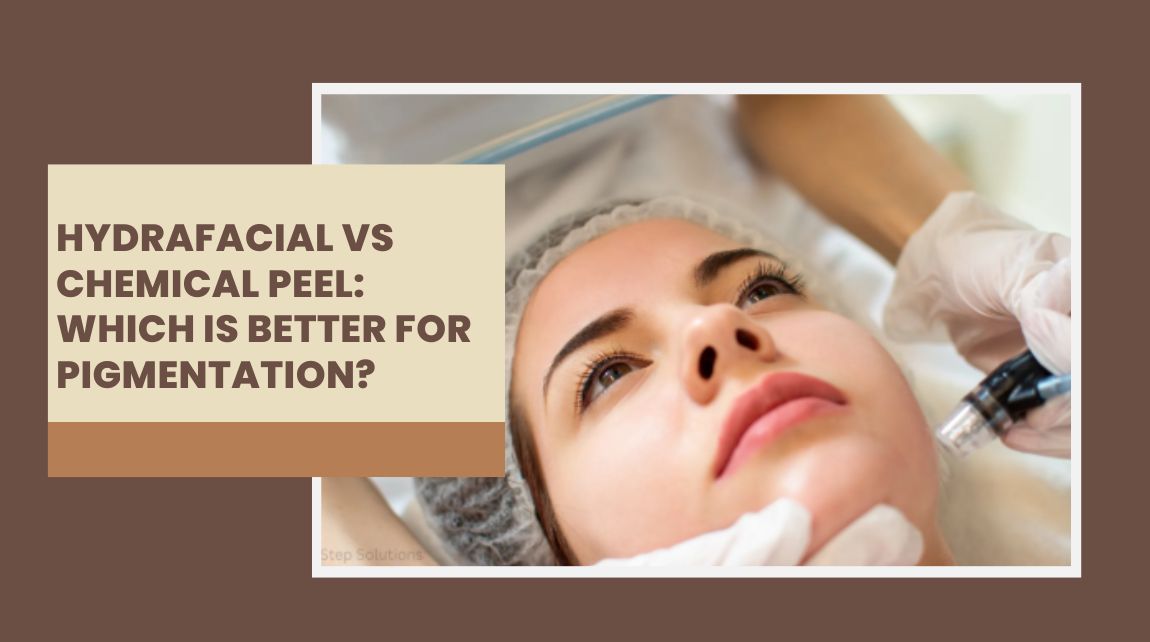
HydraFacial vs Chemical Peel: Which is Better for Pigmentation?
Pigmentation treatment sounds simple online. Real skin is not. Many patients in Delhi NCR start with one fear. “What if treatment darkens my skin more?” That fear is valid. Since Indian skin contains more active melanin, aggressive treatments can trigger Post-Inflammatory Hyperpigmentation (dark marks after skin irritation).
By the way, Delhi pollution makes this worse.
PM2.5 particles, dust, sweat, and UV exposure constantly inflame the skin barrier. That dull “Delhi face” many people notice after commuting? It is often dehydration, oxidation, clogged pores, and uneven melanin activity happening together. This is where the HydraFacial vs Chemical Peel debate starts.
One hydrafacial treatment focuses on cleansing and hydration. The other targets pigment correction deeper inside the skin. They are not interchangeable. That matters.
HydraFacial vs Chemical Peel: Quick Overview
| Factor | HydraFacial | Chemical Peel |
|---|---|---|
| Main Goal | Deep cleansing and hydration | Pigment correction and resurfacing |
| Best For | Dullness, pollution damage, sensitive skin | Melasma, acne marks, stubborn pigmentation |
| Recovery Time | Usually none | 3–7 days |
| Risk of PIH | Very low | Moderate if aftercare fails |
| Average Cost in Delhi NCR | ₹2,500 – ₹15,000 | ₹2,000 – ₹6,000 |
| Popular Trend in 2026 | Pre-event glow treatment | Clinical pigmentation correction |
| Suitable for Beginners | Yes | Depends on skin assessment |
Why Pigmentation Is Harder in Indian Skin
Indian skin usually falls under Fitzpatrick IV–VI (skin types with higher melanin response). That means inflammation triggers pigment faster. A simple acne breakout can leave marks for months. A harsh peel can create rebound pigmentation. Even excessive scrubbing may darken skin unevenly. Since Delhi NCR has strong UV exposure almost year-round, post-treatment sun sensitivity becomes a serious concern. This is why dermatologists now prefer conservative protocols. Not aggressive ones.
What is HydraFacial?
HydraFacial is a multi-step machine-based facial. It combines exfoliation, suction extraction, hydration infusion, and antioxidant delivery in one sitting. It does not rely on aggressive acids. It does not create visible peeling.
Since the procedure focuses on surface-level congestion and hydration, recovery is usually immediate. Many clinics call it the “lunchtime facial” because patients often return to work the same day.
In Delhi NCR, HydraFacial demand continues rising at roughly 10–12% annually because urban patients want low-downtime treatments. The “event facial” trend also drives popularity. Wedding season. Corporate events. Influencer shoots. Social gatherings. People want a fast glow without recovery time.
How HydraFacial Helps Pigmentation?
HydraFacial does not aggressively remove deep pigmentation like melasma. It helps indirectly. Since the treatment deeply cleans pores and removes pollution buildup, skin reflects light more evenly. Hydration also reduces surface dullness, making hydrafacial pigmentation appear softer temporarily. For patients with:
- Mild tanning
- Uneven texture
- Early pigmentation
- Sensitive skin
- Pollution-induced dullness
HydraFacial can work very well. It also supports skin barrier recovery. That matters because damaged skin barriers worsen pigmentation over time.
Why HydraFacial Feels Safer for Beginners?
HydraFacial is often considered “PIH-safe” for Indian skin. PIH-safe means low dark-mark risk after treatment. Since the procedure avoids deep acids and thermal injury, the chance of rebound pigmentation stays very low. This makes it a safer starting point for first-time aesthetic patients.
Especially in Delhi summers. Especially for sensitive skin. Especially for people who cannot avoid sunlight after treatment. That practicality matters more than marketing claims.
What Is a Chemical Peel?
Chemical peels use controlled acids to exfoliate damaged skin layers. Depending on strength, they target pigmentation, acne marks, fine lines, and uneven texture. The acids vary. Common options include:
- Glycolic acid
- Salicylic acid
- Lactic acid
- TCA peels (trichloroacetic acid peels)
- Yellow peels
In Indian dermatology clinics, superficial peels dominate the market with nearly 42.7% share because they balance results with lower complication risk. That shift happened for a reason. Older medium-depth peels created too many pigmentation complications in darker skin tone
How Chemical Peels Target Pigmentation
Chemical peels work differently from HydraFacial. They actively accelerate skin turnover. Since pigmented cells sit within upper skin layers, controlled exfoliation helps remove uneven melanin gradually. Dermatologists often recommend peels for:
- Melasma
- Acne marks
- Sunspots
- Post-acne pigmentation
- Uneven skin tone
This makes chemical peels more corrective than cosmetic. That distinction is important. HydraFacial refreshes the skin. Chemical peels try to change pigmentation patterns over time.
Why Chemical Peels Need More Discipline
This is where many patients fail. Not during treatment. After treatment. Since chemical peels temporarily weaken the outer skin barrier, UV exposure can trigger rebound darkening. Delhi’s harsh sunlight increases this risk further. Patients usually need:
- Heavy SPF reapplication
- Indoor recovery for several days
- No active skincare temporarily
- Strict hydration support
- Heat avoidance
Skipping aftercare can undo progress fast. Some patients actually become darker after improper post-peel care. That is why experienced dermatologists in NCR usually prefer superficial glycolic or salicylic peels first instead of aggressive resurfacing. Slow correction is safer correction.
HydraFacial vs Chemical Peel for Melasma
Chemical peel usually performs better. Melasma is not simple surface dullness. It is a chronic pigment disorder linked to hormones, UV exposure, heat, and inflammation. HydraFacial may brighten the skin temporarily. But it rarely addresses melasma deeply enough alone. Chemical peels can help reduce pigment intensity because they accelerate controlled exfoliation. Still, melasma often relapses.
That is normal.
Melasma management is long-term maintenance. Not one-time treatment. Many dermatologists now combine peels with:
- Prescription creams
- Tranexamic acid therapies
- Oral antioxidants
- Laser protocols
- Sun-protection counseling
Because pigmentation behaves differently in Indian skin.
HydraFacial vs Chemical Peel for Acne Marks
Chemical peel usually wins again. Acne marks respond better to resurfacing-based treatments because pigment often sits deeper than superficial dullness. Salicylic acid peels remain popular because salicylic acid is oil-soluble (penetrates oily pores effectively). This makes it useful for acne-prone Indian skin.
HydraFacial still helps. Since suction extraction removes congestion gently, it reduces future breakouts and inflammation. Fewer breakouts often means fewer new pigmentation marks.
So the treatment can support prevention. Not just appearance.
Which Treatment Gives Faster Visible Results?
HydraFacial gives faster cosmetic results. Skin usually looks brighter immediately. Hydrated skin reflects light better. Cleansed pores also create smoother texture. That “glass skin” effect many Delhi clinics advertise mainly comes from temporary hydration and exfoliation.
Chemical peels are slower. Sometimes skin even looks worse initially because peeling and dryness appear during recovery. Results build gradually over multiple sessions. This difference matters psychologically. Many patients quit chemical peels too early because they expect instant glow.
Why Combination Therapy Is Growing in Delhi NCR
The 2026 trend is not choosing one treatment forever. It is combining both strategically. Many dermatologists now use “combo therapy” protocols for pigmentation-prone patients. A common sequence looks like this:
- HydraFacial for deep cleansing and hydration
- Barrier recovery phase
- Light chemical peel after 1–2 weeks
- Maintenance facials monthly
Since pollution constantly stresses Delhi skin, preparing the barrier before peeling reduces irritation risk. That is smarter medicine. Not aggressive medicine.
Is HydraFacial Better for Sensitive Skin?
Usually yes. Sensitive skin reacts unpredictably to acids. Redness, burning, irritation, and rebound pigmentation become more common after peels. HydraFacial avoids many of these triggers.
Since it focuses more on hydration and controlled suction, recovery stays easier for reactive skin types. Patients with rosacea tendencies, early barrier damage, or dryness often tolerate it better. Still, not every HydraFacial is gentle.
Some clinics over-exfoliate during extraction. Device settings matter. Operator experience matters too. Do not choose clinics based only on Instagram videos.
Which Treatment Is More Affordable?
Chemical peels usually cost less per session. Average Delhi NCR pricing in 2026:
- HydraFacial: ₹2,500 – ₹15,000
- Chemical Peel: ₹2,000 – ₹6,000
Luxury HydraFacials cost more because clinics add boosters, LED therapy, oxygen infusion, or branded serums. But cheaper does not always mean economical. Since pigmentation often requires multiple peel sessions plus aftercare products, long-term treatment costs can rise.
Who Should Choose HydraFacial?
HydraFacial usually fits people who:
- Live in high-pollution areas
- Need instant glow before events
- Have sensitive skin
- Want minimal downtime
- Fear post-treatment darkening
- Need maintenance skincare
It works well for preventive care. Not just corrections.
Who Should Choose Chemical Peel?
Chemical peels usually fit people dealing with:
- Melasma
- Acne marks
- Sun pigmentation
- Uneven skin tone
- Chronic discoloration
- Oily acne-prone skin
But commitment matters. Since aftercare decides outcomes, patients must follow SPF discipline seriously for several days after treatment. Skipping sunscreen defeats the treatment itself.
Is One Treatment Better Than the Other?
Not exactly. They solve different layers of the problem.
HydraFacial is better for maintenance, hydration, pollution recovery, and quick glow. Chemical peels are better for stubborn pigmentation correction. That is why experienced dermatologists in gugaon rarely treat pigmentation using only one method long term.
Skin behaves dynamically.
Delhi weather changes. Hormones change. Sun exposure changes. Barrier health changes. Treatment plans should adapt too. The smarter question is not “Which facial is trending?”
It is this: “Is my pigmentation caused by surface dullness, or deeper melanin activity?” That answer usually decides the treatment.
Book Pigmentation Treatment at Kyra Aesthetics, Gurgaon
Pigmentation treatment in Gurgaon works best when diagnosis comes before procedure selection. Many people treat melasma, tanning, and acne marks the same way. Skin does not respond that way.
Kyra Aesthetics, located at Golf Course Gurgaon, offers customized pigmentation treatments for Indian skin types. The pigmentation clinic in gurgaon is run under supervision of Ms. Anita Arya, who brings 12+ years of aesthetic skincare experience.
Since Indian skin has higher risk of rebound pigmentation, treatment planning focuses on safety first. HydraFacial, chemical peels, and combination therapies are selected based on skin sensitivity, pigmentation depth, and lifestyle exposure to Delhi NCR pollution and sun. A proper consultation can prevent months of trial-and-error skincare. Book your appointment now.