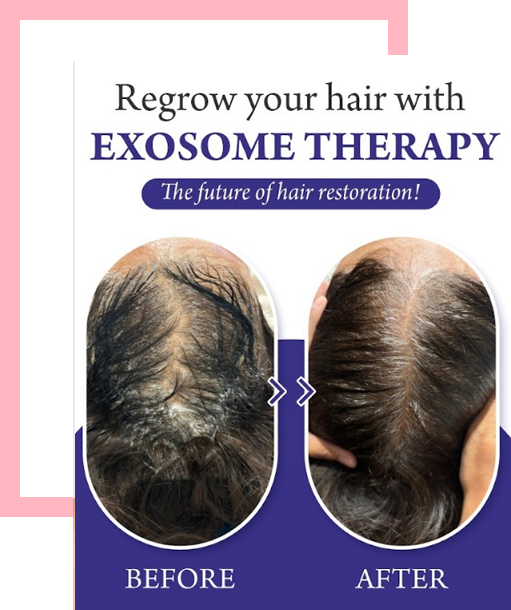
Exosome therapy for hair loss in Delhi is a non-surgical regenerative treatment being explored for people with thinning hair, pattern hair loss, or weakened follicles. Exosomes are tiny extracellular vesicles that carry signaling molecules involved in cell communication and may support follicular activity. Depending on the protocol, exosomes may be delivered through scalp injections or applied after microneedling. A session commonly takes around 30–60 minutes, while the number of sessions depends on the product, delivery method, hair-loss severity, and clinical assessment. Early research is promising, but results are not guaranteed, and treatment protocols are not yet standardized.
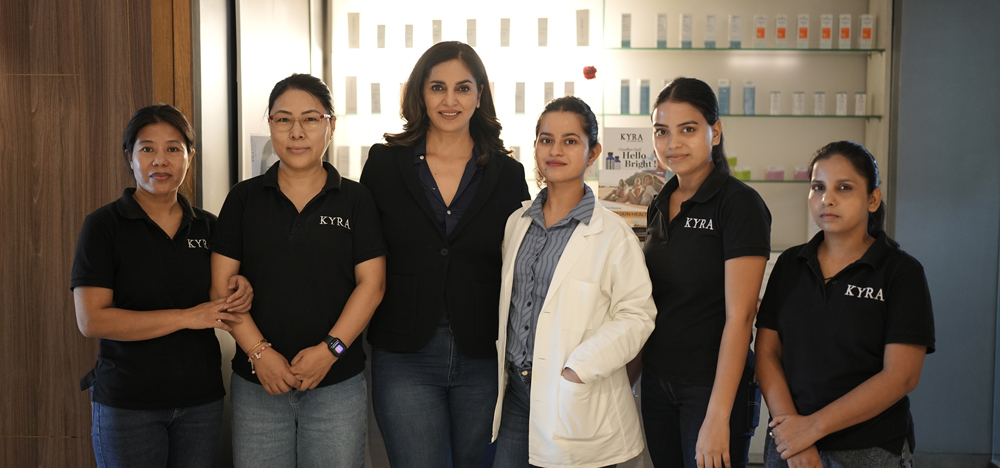
Kyra Aesthetic Clinic brings 24+ years of aesthetic and cosmetology experience, with personalised hair-loss assessment, professionally supervised treatments, and individualized recommendations across Delhi NCR.
With personalised treatment planning and consistent monitoring, Kyra has served 50,000+ clients and maintains an average 4.8 rating across its Delhi NCR branches.
Exosome therapy works by delivering extracellular vesicles containing signaling molecules that may influence communication between cells around the hair follicle. Research suggests exosomes may affect pathways involved in follicle activity, angiogenesis, inflammation, and the transition of follicles into the active growth phase. However, the exact effect depends on the exosome source, preparation, dose, and delivery method, and clinical evidence remains limited.
The Exosome Hair Regrowth Treatment generally involves:
Hair-loss pattern, scalp condition, and follicle health are evaluated.
The appropriate product and delivery method are selected.
The treatment area is cleaned and numbed when required.
Exosomes are delivered through targeted microinjections or another clinically selected method.
Some protocols combine exosomes with microneedling to facilitate topical delivery.
The scalp is cleaned, and post-treatment instructions are provided.
The exact exosome source, concentration, formulation, delivery method, and session schedule can vary considerably between products and clinics.
Exosome therapy may be considered for adults with early-to-moderate pattern hair loss, diffuse thinning, or weakened but viable follicles after a proper diagnosis. It may be discussed when conventional treatments have not produced the desired response, but it should not automatically replace established medical treatments. People with unexplained sudden hair loss, active scalp infection, scarring alopecia, certain medical conditions, allergies to treatment components, or unrealistic expectations may require alternative management or further evaluation first.
Exosomes offer regenerative support for selected patients, although clinical evidence is still emerging and outcomes vary between studies and treatment protocols.
Exosomes are not expected to recreate follicles that have been permanently destroyed. Established bald areas may therefore require other approaches, including hair transplantation, depending on follicle viability and diagnosis
Early clinical studies report improvements in hair density and thickness, but timelines vary considerably because studies use different exosome sources, doses, and delivery methods. Noticeable changes generally require several months rather than immediate regrowth. Current evidence remains preliminary.
Exosome scalp treatment generally involves minimal downtime. Temporary redness, tenderness, swelling, itching, or small injection marks may occur, particularly after injections or microneedling, and usually settle as the scalp recovers.
Follow your clinician’s instructions, avoid unnecessary rubbing or scratching, and keep the treated scalp clean as advised. Avoid strenuous activity or hair products immediately after treatment if specifically instructed. Maintenance sessions may be considered depending on your response.
Exosome hair treatment in Delhi commonly costs around ₹15,000–₹50,000+ per session, depending on the product, protocol, clinic, treatment area, and whether it is combined with microneedling or another procedure. Current dermatology clinic listings in Delhi show substantial variation in pricing, so the product and treatment protocol should be checked before comparing costs.
Key factors affecting cost include:
At Kyra, we believe that the treatment plan should be based on your hair-loss pattern and follicle health rather than choosing exosomes solely because they are a newer or more expensive option.
If you’re dealing with ongoing skin, hair, or pigmentation concerns, the right guidance can make all the difference. At our dermatology clinic in Gurgaon, every treatment is personalized, based on your skin type, condition, and lifestyle. Whether you’re searching for the best dermatologist in Gurgaon or a trusted skin specialist in Gurgaon near me, expert care ensures safer, long-term results.
Schedule Consultation
Not necessarily. Exosomes, PRP, and GFC use different approaches and have different evidence bases. Exosomes are a newer regenerative option, while PRP and GFC are established blood-derived procedures used in hair clinics. Current evidence does not support calling exosomes universally superior. The appropriate treatment depends on diagnosis, follicle health, previous response, and clinical assessment.
There is no universally accepted number of sessions because clinical studies use different products and protocols. Some Delhi clinics describe courses of around 3–6 sessions, while other protocols use fewer treatments. Your dermatologist should determine the schedule based on the exosome product, delivery method, hair-loss severity, and treatment response.
Both approaches are used. Exosomes may be delivered through targeted scalp injections or applied topically after procedures such as microneedling. The appropriate method depends on the product and clinical protocol.
Yes, some protocols combine exosomes with microneedling. The aim is to create controlled microchannels that may facilitate topical delivery of the preparation. Microneedling radiofrequency followed by topical exosome application improves in hair density and diameter, but larger controlled trials are still needed.
Early studies have generally reported mild and temporary adverse effects, but the long-term safety of exosome products for hair loss is not fully established. Product source, manufacturing, preparation, dose, and administration all matter.
Usually, expectations should be realistic. Exosome therapy aims to support existing or weakened follicles rather than recreate follicles that are permanently lost. If an area has advanced follicular loss, a dermatologist may discuss other options such as hair transplantation. The suitability of any regenerative treatment depends on whether viable follicles remain.
They may sometimes be used as part of the same overall hair-loss plan, but the combination should be decided by a dermatologist. Minoxidil and finasteride target established mechanisms involved in pattern hair loss, while exosome therapy is being investigated as a regenerative approach. Combining treatments should depend on your diagnosis, medical history, and treatment goals.