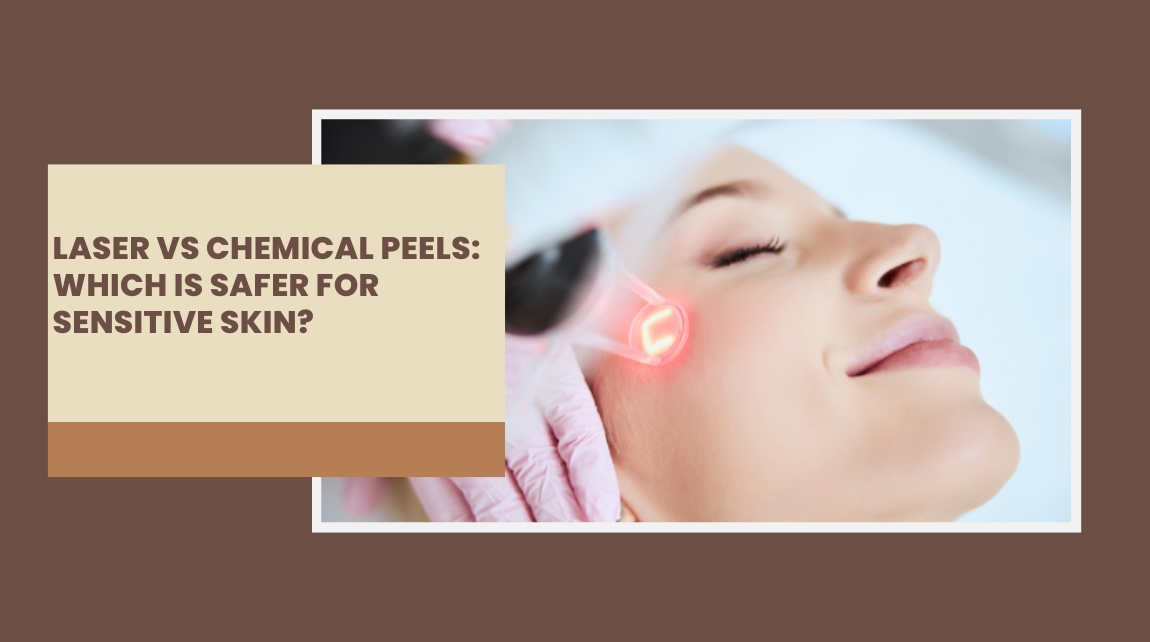
Laser vs Chemical Peels: Which is Safer for Sensitive Skin?
When it comes to advanced skincare, laser treatments and chemical peels are two of the most popular options for concerns like pigmentation, acne marks, fine lines, and uneven texture. While both can deliver visible results, choosing the right treatment becomes more complex if you have sensitive skin. Skin sensitivity increases the risk of redness, irritation, burns, and prolonged recovery if the procedure is not well suited. That’s why safety, customization, and dermatologist supervision matter more than aggressive results.
This article offers a clear, unbiased comparison of laser or chemical peels, focusing specifically on which option is safer for sensitive skin, so you can make an informed, skin-friendly decision.
What is Considered Sensitive Skin?
Sensitive skin is a condition where the skin reacts easily to external triggers such as skincare products, weather changes, or cosmetic procedures. Common signs include redness, burning, itching, stinging, dryness, or tightness, even with mild exposure. Conditions like rosacea, eczema, contact dermatitis, and acne-prone skin are often associated with heightened sensitivity. Sensitive skin has a weaker protective barrier, making it more vulnerable to inflammation and damage. As a result, treatments like laser treatment for hair removal or chemical peels can cause stronger reactions if not carefully selected.
What are Laser Skin Treatments?
Laser skin treatments are advanced dermatological procedures that use focused light energy to target specific skin concerns without affecting surrounding tissue. These treatments work by delivering controlled heat and light energy into the skin, stimulating collagen production, breaking down pigmentation, or resurfacing damaged layers. Because lasers can be precisely adjusted, they are often used for concerns such as pigmentation, acne scars, fine lines, enlarged pores, uneven texture, and sun damage. For sensitive skin, the safety of laser treatments depends heavily on the laser type, energy settings, and the expertise of the dermatologist performing the procedure.
Types of Lasers Used in Dermatology
- Ablative lasers: Remove the outer skin layer to improve deep wrinkles and scars; higher results but more downtime.
- Non-ablative lasers: Heat deeper skin layers without removing skin; safer for sensitive skin with minimal downtime.
- Fractional lasers: Treat microscopic skin zones while leaving surrounding skin intact, improving healing and safety.
What are Chemical Peels?
Chemical peels are skin-resurfacing treatments that use medical-grade acids to exfoliate the outer layers of the skin. These acids work by dissolving dead skin cells, promoting cell turnover, and encouraging fresh, smoother skin to emerge. Chemical peels are commonly used to treat acne, pigmentation, dullness, uneven tone, fine lines, and mild scars. The strength of the acid and depth of penetration determine how intense the peel will be. For sensitive skin, choosing the correct peel type and concentration is critical, as overly strong peels can disrupt the skin barrier and cause irritation or burns.
Types of Chemical Peels
- Superficial peels: Mild acids like glycolic or lactic acid; gentle exfoliation with minimal irritation.
- Medium-depth peels: Penetrate deeper to treat pigmentation and acne scars; moderate downtime required.
- Deep chemical peels: Strong acids for severe skin damage; higher risk and usually not suitable for sensitive skin.
Laser vs. Chemical Peels: Key Differences at a Glance
This quick comparison highlights why treatment choice matters. Especially for sensitive skin, where controlled energy-based treatments may offer better safety when performed correctly.
| Factor | Laser Treatments | Chemical Peels |
|---|---|---|
| Mechanism of action | Light and heat energy | Acid-based exfoliation |
| Depth of penetration | Precisely controlled | Depends on peel strength |
| Downtime & recovery | Low to moderate | Minimal to extended |
| Skin irritation level | Mild to moderate | Moderate to high |
| Number of sessions | 3–6 sessions | 1–4 sessions |
| Common issues treated | Scars, pigmentation, aging | Acne, dullness, spots |
| Suitability for sensitive skin | Safer with correct settings | Risky if too strong |
| Risk of pigmentation | Low with expert care | Higher if overdone |
| Results appearance | Gradual, natural | Faster but aggressive |
Laser vs Chemical Peels: Which is Safer for Sensitive Skin
For sensitive skin, lasers are generally considered safer than chemical peels when performed correctly. Because lasers can be precisely controlled in terms of depth, intensity, and heat. Modern non-ablative or low-energy lasers target specific skin concerns while minimizing damage to the surrounding skin, reducing the risk of irritation. Chemical peels, on the other hand, rely on acids that exfoliate the skin barrier, which can trigger burning, inflammation, peeling, or flare-ups in sensitive skin types. If the acid strength is too high or left on too long, the risk of redness and barrier damage increases. Dermatologist customization is essential for both.
Side Effects and Risks for Sensitive Skin Types
Both lasers and chemical peels carry risks for sensitive skin, especially without proper customization and aftercare.
Possible Laser Side Effects
- Temporary redness and swelling
- Warmth or heat sensitivity
- Mild skin tightness
- Post-inflammatory hyperpigmentation
- Delayed skin healing
- Sensitivity to sunlight
Possible Chemical Peel Side Effects
- Stinging and burning sensation
- Visible peeling and flaking
- Skin barrier weakening
- Increased dryness and irritation
- Allergic or acid reactions
- Risk of chemical burns
Downtime and Healing: What Sensitive Skin Needs
Downtime and healing are critical considerations for anyone with sensitive skin, as the skin barrier takes longer to recover after professional treatments. Laser treatments, especially non-ablative or low-energy lasers, usually involve mild redness and swelling that subsides within a few days, though sensitive skin may need up to a week for full recovery. Chemical peels, even superficial ones, can cause peeling, dryness, and stinging for several days, with sensitive skin often experiencing prolonged irritation. Regardless of the treatment, barrier repair is essential. Gentle cleansers, fragrance-free moisturizers, sunscreen, and dermatologist-recommended aftercare help prevent complications and support safe healing.
Results and Longevity for Sensitive Skin
The speed of visible results varies between laser treatments and chemical peels. Lasers often deliver gradual improvements over multiple sessions, which is safer for sensitive skin as it avoids sudden trauma. Chemical peels may show quicker surface-level results, but sensitive skin can react unpredictably. In terms of longevity, laser results typically last longer when maintenance sessions are followed, while peel results may fade faster without consistent skincare. A key risk for sensitive skin is over-treatment, which can lead to chronic redness, pigmentation, or barrier damage. Slow, controlled treatments with adequate recovery time usually provide better, longer-lasting outcomes for sensitive skin types.
Cost Comparison and Maintenance
The cost per session for laser treatments is generally Rs2000-Rs10000 higher than chemical peels due to advanced technology and specialist expertise. However, lasers often require fewer sessions for long-term improvement, which may balance the overall expense. Chemical peels are usually more affordable per session but often need multiple sittings and regular maintenance. For sensitive skin, long-term costs also include post-treatment skincare and dermatologist follow-ups. Maintenance is crucial for both options, as untreated sensitivity can worsen over time. Choosing a treatment based on safety, suitability, and sustainable maintenance often proves more cost-effective than opting for the cheapest option upfront.
Expert Dermatologist Insights
Professional guidance ensures treatments are safe, personalized, and effective for sensitive skin without triggering unnecessary irritation.
- Skin analysis before any procedure
- Patch testing to prevent reactions
- Customized laser or peel strength
- Adjusted settings for sensitive skin
- Medical-grade aftercare planning
- Avoiding treatments during flare-ups
Who Should Choose Laser Treatments?
- Mild to moderately sensitive skin
- Persistent pigmentation or sun damage
- Acne scars with intact barrier
- Patients preferring gradual results
- Those avoiding chemical exfoliation
- Individuals seeking longer-lasting outcomes
Who Should Choose Chemical Peels?
- Very mild, superficial peels only
- Sensitive skin with dullness
- Uneven tone without inflammation
- First-time aesthetic treatment seekers
- Skin tolerant to mild acids
- Patients needing minimal downtime
Next Visit Kyra Aesthetics Clinic in Gurgaon
At Kyra Aesthetic Clinic, advanced skincare meets medical expertise to deliver safe, visible, and long-lasting results. The clinic is trusted for Laser hair removal Treatments in Gurgaon, offering dermatologist-led solutions for pigmentation, acne scars, uneven tone, and skin rejuvenation using modern, skin-safe technologies. For patients seeking gentler resurfacing, Kyra also specializes in Chemical Peels Treatment in Gurgaon, with customized peel strengths designed even for sensitive skin. Every procedure begins with a detailed skin analysis and personalized treatment plan, ensuring safety, minimal downtime, and natural-looking outcomes.
If you’re looking for expert aesthetic care with proven results, Kyra Aesthetic Clinic is your destination for confident, healthy skin. Book your appointment now.